




What is Exome?
December 16, 2025
Oncology Tests
December 16, 2025What is Exome?
December 16, 2025Oncology Tests
December 16, 2025

What is Exome Sequencing?
What is Exome Sequencing?
Exome refers to all protein-coding regions of the human genome. Although it constitutes only 1–2% of the genome, more than 85% of known genetic diseases are located within exons. For this reason, exome analysis forms the foundation of modern diagnostic genetic testing.
Exome analysis is performed using next-generation sequencing (NGS) technologies through the Whole Exome Sequencing (WES) method. This test examines the exon regions of approximately 20,000 genes in human DNA to identify mutations that may lead to inherited disorders, cancer predisposition, and rare genetic syndromes. The most significant advantage of exome testing is its ability to evaluate thousands of genes in a single analysis, providing much broader coverage than conventional gene panel tests.
In clinical practice, exome analysis plays a crucial role in the investigation of unexplained genetic diseases, the identification of the genetic basis of early-onset cancers, and the assessment of inherited risks among family members. In addition, pharmacogenetic evaluations can reveal the genetic basis of individual responses to specific medications. In this way, exome testing contributes not only to diagnosis but also to the planning of personalized treatment strategies.
The variants identified through exome analysis may include a wide range of genetic alterations such as SNVs (single nucleotide variants), small indels (insertions/deletions), CNVs (copy number variations), and splice-site mutations. All findings are interpreted by expert medical geneticists and bioinformatics teams through comparison with international clinical databases such as ClinVar, HGMD, and OMIM. Thus, exome testing not only provides laboratory data but also delivers clinically meaningful insights to guide disease management and therapeutic decision-making.
The Role of the Exome in the Human Body
The exome consists of the protein-coding exons within the human genome, and these regions enable the production of proteins, which are the fundamental building blocks of cells. Although the exome represents only a small portion of the genome, mutations in exons can affect a wide range of biological functions, from metabolic processes and immune responses to growth, development, and cancer formation.
Every protein in the body is encoded by the exons of a specific gene. For this reason, exome sequencing directly reveals alterations that disrupt protein production. For example, exon mutations in genes involved in DNA repair may increase cancer risk, while changes in genes related to neurological functions may be associated with conditions such as epilepsy, autism, or developmental delay.
The most important role of the exome is to elucidate the molecular basis of diseases and to guide clinical diagnosis. Through exome analysis, not only existing health problems but also inherited disease risks that may emerge in the future can be identified in advance. This enables the development of early diagnostic and preventive health strategies for both patients and their family members.
How Is the Exome Test (WES) Performed?
Whole Exome Sequencing (WES) is a next-generation sequencing method used to analyze the protein-coding regions of DNA. With exome testing, thousands of genes are examined simultaneously, allowing the identification of genetic mutations that increase disease risk.
The testing process generally consists of the following steps:
- Sample collection: DNA isolation from blood or saliva
- Exome enrichment (exome capture): Selection of exon regions using specific probes
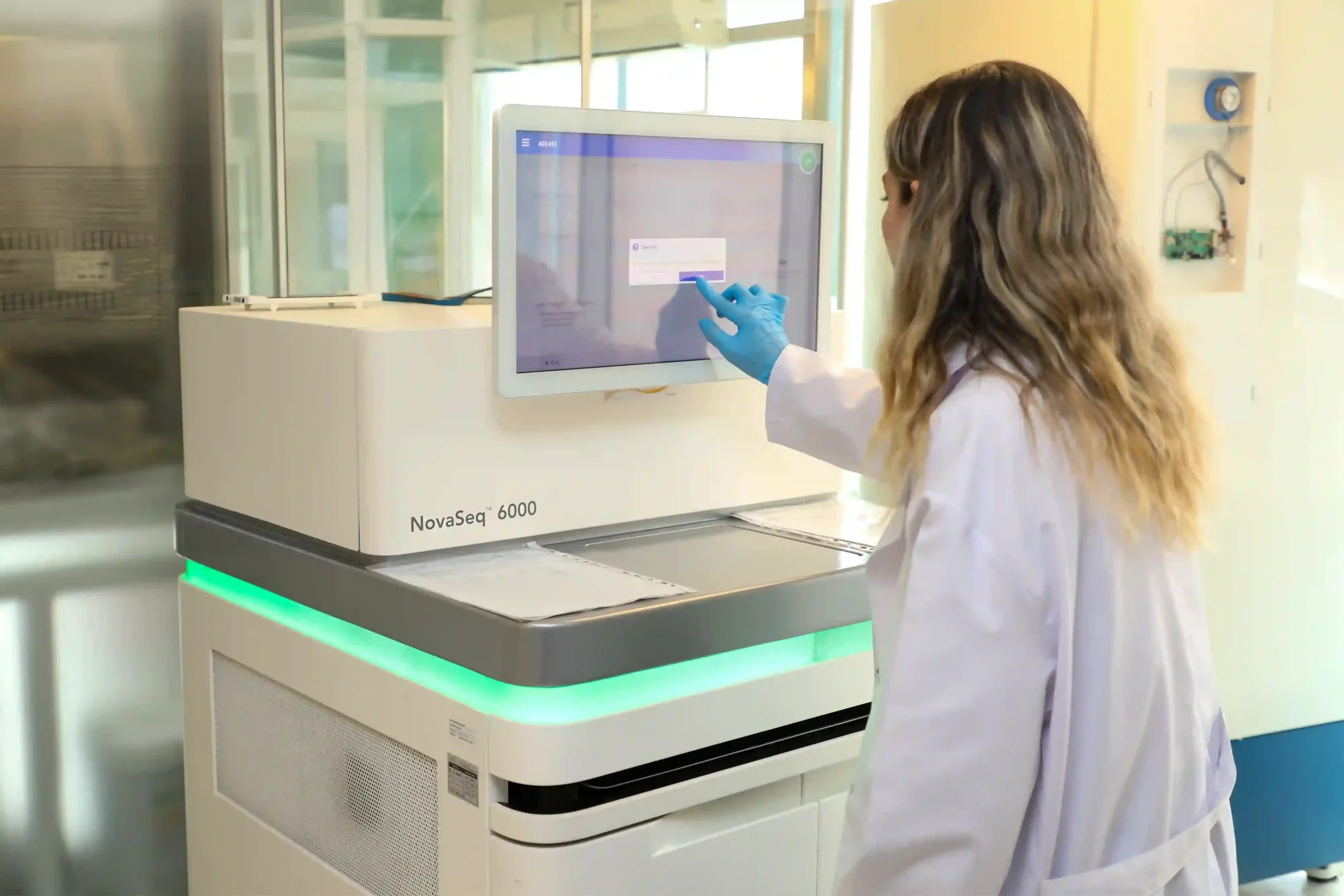
- NGS sequencing: High-precision analysis on Illumina platforms
- Bioinformatic analysis: Detection of SNVs, indels, CNVs, and splice-site variants
- Clinical reporting: Interpretation of pathogenic findings
Advantages of Exome Testing
Exome testing is one of the most powerful tools in the diagnosis of genetic disorders and oncological analyses. Because it examines thousands of genes simultaneously, it is widely preferred in clinical practice as a comprehensive and cost-effective solution.
- Comprehensive analysis: Exon regions of more than 20,000 genes are screened.
- High diagnostic yield: Since over 85% of disease-associated variants are located in exons, the test provides high success rates.
- Personalized medicine: Drug selection and treatment planning can be tailored according to detected mutations.
- Cost-effective: Less expensive compared to whole genome sequencing.
Who Is Exome Testing Recommended For?
Exome testing is recommended in cases of suspected unexplained genetic disorders, early-onset cancers, and individuals or families with inherited risk. It is also a strong alternative when standard genetic panels fail to provide answers.
- Individuals with developmental delay, epilepsy, or autism spectrum disorders
- People with a family history of rare genetic diseases
- Patients diagnosed with cancer at an early age
- Individuals who wish to learn about their inherited disease carrier status
Limitations of Exome Testing
Although exome testing is highly powerful, it has certain limitations because it does not cover the entire genome. Therefore, results should always be interpreted together with clinical findings.
- Variants located in intronic and regulatory regions are not detected.
- Some structural variants, repetitive regions, and gene fusions may remain outside the scope of analysis.
- Variants of uncertain significance (VUS) can complicate clinical interpretation.
- Genetic counseling is required for results to gain diagnostic value.
Frequently Asked Questions
What is the difference between exome testing and genome testing?
Exome testing analyzes only protein-coding regions, whereas genome testing covers the entire DNA sequence. Exome testing is more economical and clinically focused.
How is exome testing used in cancer research?
It evaluates inherited and somatic mutations to determine cancer risk and supports targeted therapy planning.
How long does it take to receive exome test results?
Depending on laboratory workflows, results are typically reported within 3–6 weeks.
Is exome testing reliable?
NGS-based exome tests provide high accuracy; however, additional analyses may be required for certain variant types.
Can exome testing provide a definitive diagnosis?
Exome testing is a powerful diagnostic tool, but it does not always yield definitive results. Findings should be evaluated together with clinical data.
